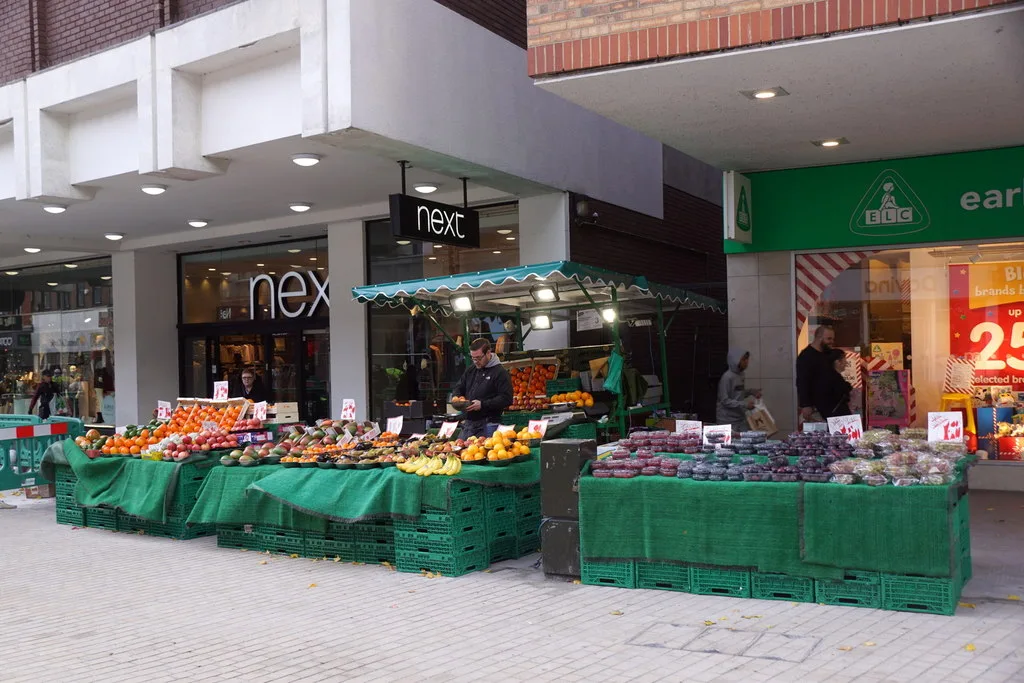

A shared trial stall on Bromley's Charter Market costs £198 for two weeks or £396 for four. The first two traders start on 29 October; apply now.
Bromley Council has reopened its trial market stall for new local businesses, after a summer pilot. Small traders can sell from a shared stall on Bromley Charter Market for two to four weeks without committing to a permanent pitch. The first two traders start on Thursday 29 October (Bromley Council, 1 October).
The cost is set out in the council’s guidance notes. Each trader pays £198 for a two-week slot or £396 for four weeks, invoiced and payable within two weeks of the slot ending (guidance notes).
How the summer pilot went
Five entrepreneurs shared a stall on the market over the summer. The council says they “generally reported increased business confidence”, and that they picked up new customers and useful feedback. Some changed their approach between weeks of the trial and drew more customers as a result.
The council has not published sales figures or named the five businesses. The new round runs for longer, two to four weeks per trader.
What you get, and what it costs
| Two-week slot | Four-week slot | |
|---|---|---|
| Trading days | 6 (Thursday, Friday, Saturday) | 12 |
| Total charge per trader | £198 | £396 |
| Works out at | £33 a trading day | £33 a trading day |
The per-day figure is our own sum from the council’s prices. The details of the stall:
- Two traders share one stall, 3.7m by 2.5m, with up to four tables between them.
- The council puts the stall up with tables, skirts and side and back sheets. Traders set out their own goods before the 9am opening.
- You must be there from 9am to 5pm on every Thursday, Friday and Saturday of your slot.
- Lighting is provided, but the power supply is low and cannot be used for cooking or heating food.
- A vehicle permit lets you load and unload in the pedestrian area before 9am and after 5pm.
- Each trader gets a Charter Market trading licence before the slot starts.
The stall stands in the northern part of the pedestrianised High Street, between Market Square and the Churchill Theatre, next to Gym Bromley.
Who can apply, and who cannot
The scheme is open to Bromley residents and businesses, and to people in an existing Bromley business support network such as Start Up Bromley. The council’s examples of suitable applicants include:
- artisans and makers of handcrafted goods, such as jewellery, pottery and custom apparel
- upcycled and zero-waste products
- handmade health, beauty and wellness goods, such as soaps and skincare
- online sellers who want to try a physical shop
- new businesses and start-ups with a new or unusual product
Some businesses are ruled out or discouraged:
- no food or drink businesses at all
- general jewellery and clothing are discouraged, to keep a good mix of products on the market
- no wholesalers, electronics, phone accessories, e-cigarettes or mock auctions, which are banned across the Charter Market
Every trader needs at least £1 million of public liability insurance. There is no appeal if an application is turned down.
The dates
- Now: applications are open, and the council says the window stays open “until further notice”.
- Thursday 15 October: the first successful applicants are told, briefed and invoiced.
- Thursday 29 October: the first two businesses start trading, for two to four weeks each.
New applications will keep being accepted after that, so later traders will follow on from the first pair (Bromley Council).
Who is running it
The scheme is run by Opportunity Bromley with Bromley Council, Start Up Bromley and Your Bromley BID. Councillor Yvonne Bear, the council’s Executive Councillor for Renewal, Recreation and Housing, said the council had extended it “so that more of those in our ambitious local business communities can gain this valuable experience”.
The Charter Market itself trades every Thursday, Friday and Saturday from 9am to 5pm. The council dates it to a charter granted by King John in 1205.
What it means for you
- If you make or sell something that is not food, and not general clothing or jewellery, this is a cheap way to test it in front of real shoppers. Six days on the High Street costs £198, shared stall included.
- Get your insurance sorted first. The £1 million public liability requirement is the condition most likely to trip up a first-time trader.
- Read the guidance notes before you apply, then use the council’s application form. Questions go to Start Up Bromley at startupbromley@gll.org.
- If you shop in the town centre, expect two new traders on the market from 29 October, changing every few weeks.
Twenty new companies were registered in the town’s BR1 and BR2 postcodes in a single fortnight last month: see our new in business roundup. For what else is on in the town centre this month, see what’s on in Bromley.
Sources
- Bromley Council: More local entrepreneurs to test products on Bromley High Street as new round of scheme launches, 1 October 2026
- Bromley Council: Test trading market stall scheme (timetable, eligibility) and supporting guidance notes (charges, stall size, rules), read 2 October 2026
Have your say