
An Orpington resident paid £90,000 for a roof on a small terraced house. Trading Standards is warning of four Bromley cases, with demands topping £270,000.
An Orpington resident paid around £90,000 for a new roof on a small terraced property after a cold call at the door. In Chislehurst, a resident who asked a trader to look at a roof leak was quoted a few hundred pounds. That became around £10,000, then more than £100,000. The council says the resident was allegedly told to cash in a pension or use the deeds of the house to pay for it.
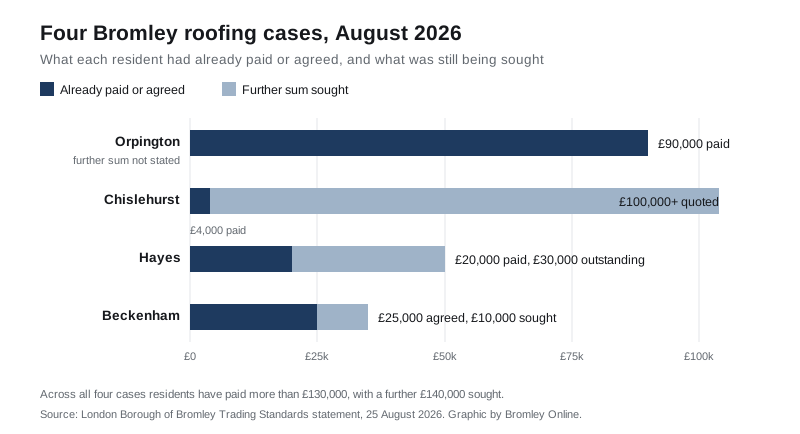
Those are two of four separate roofing cases Bromley Trading Standards has dealt with in recent weeks. Across all four, residents have already paid more than £130,000. Traders are seeking a further £140,000. The council puts the potential total value of the work at more than £270,000 (Bromley Council, 25 August).
The cases are unrelated to each other. In three of the four, Trading Standards stepped in alongside other agencies after someone raised concerns. The residents involved are not being identified, for their own protection.
The four cases
- Orpington. Trading Standards and police responded to reports that a resident had paid around £90,000 for a new roof on a small, terraced property following a cold call. A suspect has been identified and enquiries into the work and the pricing are continuing.
- Chislehurst. A resident contacted a trader after seeing an advertisement, to investigate a roof leak. A quote of a few hundred pounds reportedly grew to around £10,000 of roofing work. The resident paid £4,000. Further work was then quoted at more than £100,000. The council says the resident was allegedly advised to cash in their pension or use the deeds of their home to fund it.
- Hayes. A resident had paid £20,000 of a £50,000 demand after being approached by a roofer offering to replace the roof, leaving £30,000 outstanding. Trading Standards intervened and advised that no further payments should be made while enquiries continue.
- Beckenham. A couple were being asked to pay a further £10,000 for roofing and guttering work, having already agreed works valued at £25,000. The trader had first approached them near their home.
Councillor Angela Page, executive councillor for public protection and enforcement, said: “These cases are deeply concerning. Residents have faced demands for many thousands of pounds, sometimes for work that may not have been needed, and in these cases at prices that appear vastly excessive.”
The scaffolding trick
One detail in the council’s warning is worth pulling out, because it is the point at which most people feel trapped.
Scaffolding goes up fast, often at very short notice. Once it is there, withdrawing feels expensive and awkward. Trading Standards says some residents may have felt pressured into going ahead for exactly that reason.
The council’s position is blunt: you are not automatically responsible for scaffolding costs simply because scaffolding has appeared at your property (Bromley Council).
The council also describes the wider pattern. Work is offered cheaply to get initial agreement. More problems are then “discovered” and the price climbs. Scaffolding appears. Only a fraction of the promised repairs may actually get done (Bromley Council, 24 August).
What the law already gives you
The council’s advice is about avoiding the problem. The law also gives you a way out after the fact, and it is stronger than most people realise.
If you agree to work at your doorstep, or anywhere away from the trader’s own business premises, it is an off-premises contract under the Consumer Contracts (Information, Cancellation and Additional Charges) Regulations 2013.
- You get 14 days to cancel. For a service, the period runs from the day after the contract is entered into (regulation 30).
- The trader commits a criminal offence by not telling you. Failing to give you the required written notice of the right to cancel on a doorstep contract is an offence, punishable on summary conviction by a fine up to level 5 on the standard scale (regulation 19).
- No notice means the deadline stretches to a year. If the trader never gives you that information, the cancellation period ends 12 months after it would otherwise have ended (regulation 31).
- And you may owe nothing for work already done. If the trader failed to give you the cancellation information, you bear no cost for the service supplied during the cancellation period (regulation 36(6)).
A trader is also not allowed to start work inside the cancellation period unless you have expressly asked them to. For a doorstep contract that request has to be on a durable medium, meaning in writing (regulation 36(1)).
None of that helps if the money has already gone and the trader has vanished, which is why the council’s advice is to slow the process down before anything is signed. But if scaffolding has just appeared and you are being pressed for a payment, these are the questions to ask.
What it means for you
If you are approached about roofing work in Bromley, the practical steps are short.
- Do not agree to anything at the door. Get at least three written quotes before committing to any work.
- Check the trader on the Companies House register: how long the business has been registered, its filing history, frequent director changes. None of that proves anything on its own, but it tells you where to look harder.
- Verify any claimed trade association membership by contacting the association directly, not through a link the trader gives you.
- Be wary of cash payments and of requests to transfer money to a private individual rather than a company.
- Large-scale roof renovation may need building control approval. Our planning applications guide explains how the borough’s register works.
- Use the council’s vetted trader scheme, Trading Standards Checked, if you want a starting list.
If money has already changed hands:
- Call your bank’s fraud team on 159, the Stop Scams UK number.
- Contact Citizens Advice on 0808 223 1133 for consumer advice, which is the route into Trading Standards.
- Report fraud on 0300 123 2040 or through the Report Fraud website.
- If you are at immediate risk of losing money to someone at your door, the council says to call the police on 999.
Residents can also request a free “No Cold Caller” sticker by emailing trading.standards@bromley.gov.uk, and sign up to the council’s scam alerts.
No one has been charged in connection with the four cases as far as the council’s statement records. Trading Standards says its officers are continuing to work with residents, police, banks and partner agencies.
Two further concerns appear in the council’s notes to editors. In some cases officers have questioned whether building regulations approval was sought for significant roofing work. And some residents have struggled to get money back through their banks, with referrals to the Financial Ombudsman Service where appropriate.
Sources
- Bromley Council: roofing crime warning after residents targeted by rogue roofers, 25 August 2026 (the four cases, the £270,000 figure, the scaffolding point, the Angela Page quote)
- Bromley Council: beware of rogue roofers, don’t deal with doorstep traders, 24 August 2026 (how the pattern works, the checks to run, the reporting numbers)
- The Consumer Contracts (Information, Cancellation and Additional Charges) Regulations 2013, regulations 19, 30, 31 and 36
Have your say